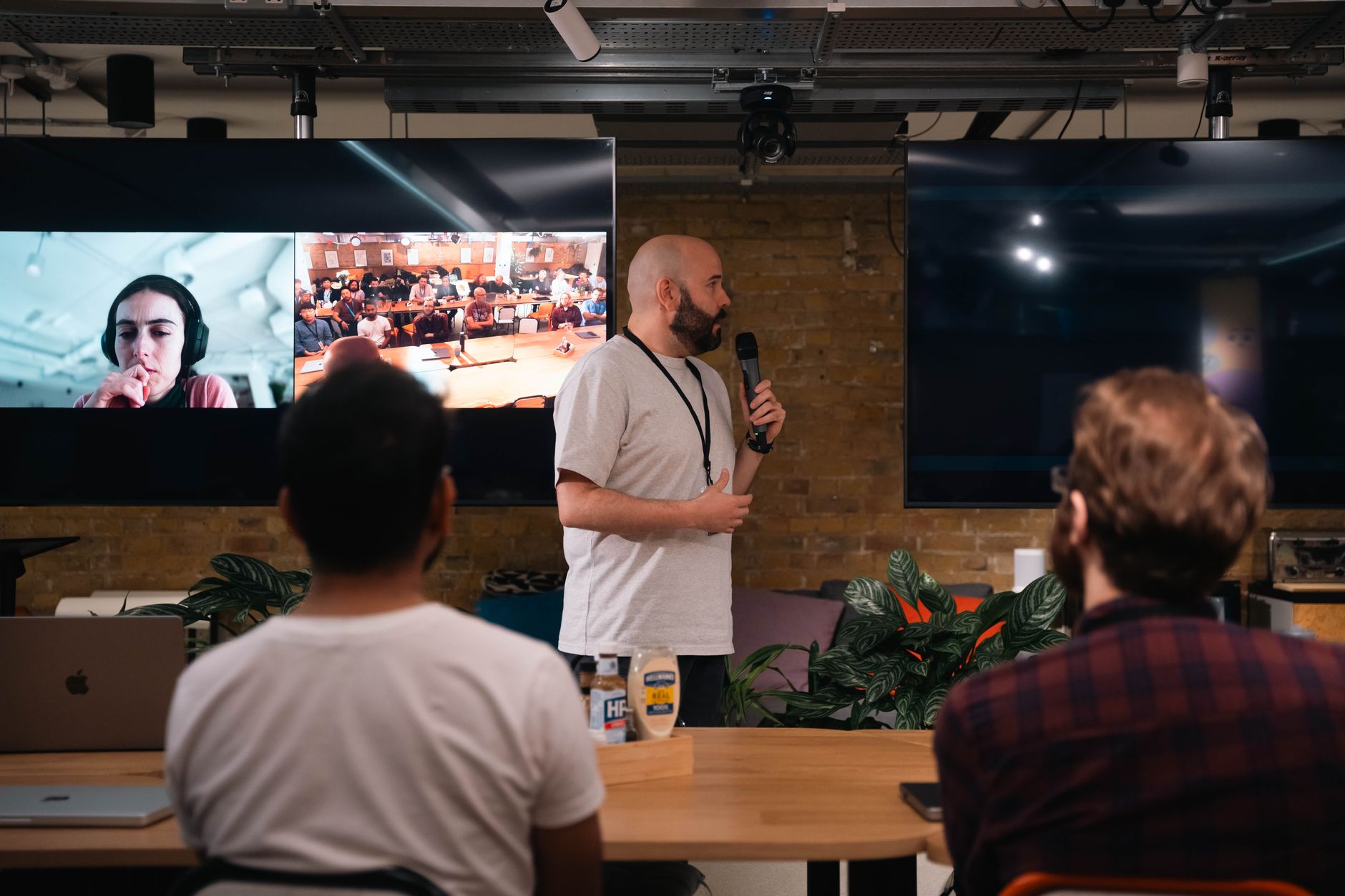
The hybrid conference was supposed to solve everything. Fly less, spend less, include more people, shrink the carbon footprint, keep the conversation global. And to be fair, the format has delivered on some of those promises. But several years on from the pandemic-era scramble that forced the model into existence, it is worth asking honestly: does the hybrid conference actually work, or does it just make everyone's experience slightly worse?
The answer, predictably, is complicated - but it leans more positive than the growing backlash suggests, provided organisers treat it as a distinct format rather than an afterthought bolted onto an in-person event.
The Genuine Case for Hybrid
Start with accessibility, because it matters more than the networking enthusiasts tend to admit. A senior researcher in Lagos, a postgraduate student in Bogotá, or an independent practitioner in rural Scotland may all have compelling reasons they cannot attend an in-person event in Amsterdam or Chicago - visa complications, institutional travel budgets, caring responsibilities, disability, or simply the economic reality that conference registration plus flights plus hotel for four days costs more than some monthly salaries. Hybrid formats remove those barriers. That is not a minor point. It changes who gets to participate in knowledge exchange, and over time, it changes whose voices shape a field.
International participation figures at major hybrid events tend to bear this out. Conferences that added a serious online component often found that their geographic reach expanded significantly - not just in passive viewership, but in paper submissions, Q&A contributions, and follow-up collaborations. The Association for Computational Linguistics, for instance, moved to hybrid and found itself reaching communities that had simply never been present before. That is a genuine intellectual gain, not just a marketing metric.
Cost is the other obvious win, and it cuts both ways. Attendees save on travel and accommodation. Organisers, meanwhile, can generate additional revenue through online-only ticket tiers priced below in-person rates - broadening the audience without filling more hotel ballrooms. For smaller professional associations running on tight margins, this can be the difference between a financially viable event and one that gets cancelled.
Where Hybrid Consistently Falls Short
None of that means hybrid conferences are without real problems. The most persistent complaint from online attendees is the sense of being a second-tier participant - watching a polished livestream of people having a conversation you cannot join, unable to catch a speaker in the corridor, invisible to the room. This is not imaginary. It reflects a structural failure that many organisers still have not addressed.
Networking is the sharpest pain point. The informal architecture of an in-person conference - the coffee break, the conference dinner, the hallway collision that turns into a collaboration - does not translate to Zoom. Bolted-on solutions like virtual networking rooms and speed-networking sessions via platforms such as Hopin or Brella have improved, but they require deliberate facilitation and rarely achieve the same organic quality. Online delegates who log in expecting to replicate the in-person social experience will be disappointed. That expectation needs to be managed.
Technology failure remains a legitimate risk. A poor audio feed from a panellist who forgot to unmute, a streaming delay that means the online audience is asking questions about a slide that has already moved on, a parallel session recorded on a laptop propped against a water jug - these are not hypothetical scenarios. They are routine. And they disproportionately affect online attendees, who have no fallback if the stream drops. Organisers who underinvest in AV infrastructure and dedicated technical support are effectively treating their online audience as an afterthought, whatever their marketing says.
There is also a subtler issue around intellectual engagement. Research into conference learning suggests that online delegates are more likely to multitask, more likely to drop out mid-session, and less likely to attend the full programme. Whether that is a feature or a bug depends on your perspective - but it does mean the format is better suited to some learning goals than others. A keynote or panel discussion translates well online. A hands-on workshop, a lab demonstration, or a structured mentoring session generally does not.
What Organisers Actually Need to Do Differently
The fundamental mistake is treating hybrid as "in-person plus a camera." It is not. Running a genuinely good hybrid event requires designing two parallel but connected experiences, not one experience with a livestream attached.
Practically, that means several things:
- Appoint a dedicated online host. Not a technical moderator - a genuine host whose job is to represent online delegates in the room, read out their questions with the same prominence as those from the floor, and keep the digital audience visible to the physical one.
- Use platforms built for hybrid engagement, not repurposed videoconferencing tools. Whova, Pathable, and Eventpilot all offer features specifically designed for conference interaction - personalised agendas, in-app networking, live polling, and session Q&A that integrates both audiences. A generic Zoom webinar is not sufficient for a multi-day academic conference.
- Invest properly in AV. That means a sound engineer, not just a conference organiser who "knows a bit about tech." It means testing every session setup in advance, having a contingency stream, and ensuring every speaker - remote and in-person - has a quality microphone.
- Design networking specifically for online delegates. Not as a mirror of in-person networking, but as something that acknowledges the different context. Structured topic-based roundtables, facilitated small-group sessions, and asynchronous discussion boards around specific papers can all work well if they are built into the programme rather than offered as optional extras at the end of a long day.
- Offer on-demand access post-event. This is one area where online attendance genuinely exceeds in-person: the ability to revisit sessions, share recordings with colleagues, and engage with content at a different time zone or pace. Organisers who lock recordings behind a paywall or simply do not record at all are discarding one of hybrid's most significant advantages.
Timing matters too. Scheduling sessions to be accessible across multiple time zones is difficult but not impossible - particularly for keynotes and high-demand panels. A conference headquartered in London that runs all its sessions between 09:00 and 17:00 GMT is making a choice about whose online attendance it values.
Should You Attend Hybrid - and in Which Mode?
For attendees trying to decide whether a hybrid conference is worth their time, the honest answer depends on what you are trying to get from the event. If your primary goal is to present your work, absorb the latest research in your field, and follow the main programme, online attendance at a well-run hybrid event is genuinely good value. You save money, you save time, and - if the organisers have done their job - you will not miss the intellectual substance.
If your goals are primarily relational - building collaborations, meeting potential supervisors or employers, strengthening existing professional relationships - in-person attendance is still significantly more effective, and probably worth the cost if you can manage it. Hybrid has not solved that gap. It has reduced it slightly, but the in-person experience retains a social density that remote participation cannot yet replicate.
The best advice for attendees evaluating a hybrid event is to look carefully at what the organisers have actually built for online participants. Check whether there is a dedicated online programme or just a passive stream. Find out whether online delegates can submit questions in real time and whether those questions will actually be answered. Ask whether networking features are included, and if so, which platform is being used. A conference that has thought seriously about its online audience will have clear, specific answers to those questions. One that has not will be vague.
Hybrid conferences are worth attending. They are not always worth attending online. The difference lies almost entirely with the organisers - and that is, ultimately, where the responsibility sits.